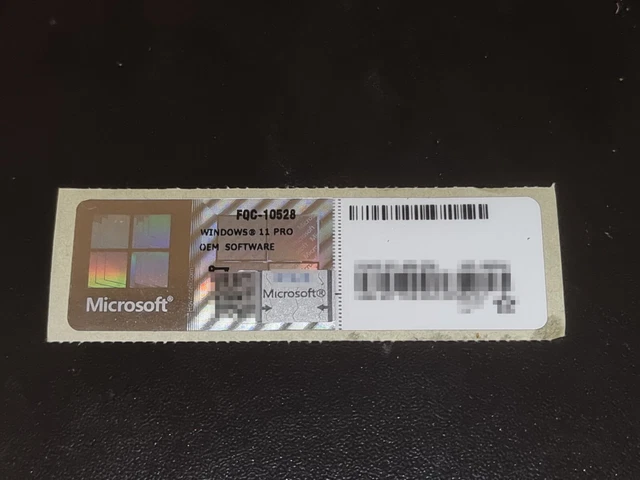
It Is Possible To Upgrade Your System From Windows 7 To Modern Windows & Office Licensing.
Windows 7 was no longer supported, which meant the end of the era of licensing software. For individuals and businesses clinging to `windows 7`, the upgrade path to Windows 11 is not a simple re-installation–it's a migration to a fundamentally different digital paradigm. This new model encompasses everything from how Windows 11 lizenz are purchased to how Office operates and how users collaborate. The old world of one-time purchases, physical media, and software suites that were isolated has been replaced with cloud-integrated subscriptions and digital licenses and a broader security for the entire ecosystem. Navigating this transition requires understanding ten critical intersections between legacy practices and the latest requirements and where the choices you make regarding your OS directly affect your security, productivity suite and the future capacity.
1. Hardware Gauntlet – Your first essential, non-negotiable first step
Windows 11 hardware needs to be installed before you consider buying it (TPM 2.0 and Secure Boot using a modern CPU). Windows 7 machines from the past, especially those made prior to 2017 are likely to fail this test. This isn't an unintentional Microsoft cash grab, it's an essential security requirement. These are the "hardware foundations of trust" that modern defenses such as Windows Defender, and even third-party security suites like Kaspersky Premium rely. In the absence of ISO requirements through an unofficial ISO modification, you'll end up with unreliable, unsupportable, and will nullify the core security features of the upgrade. This leaves you at risk in Windows 7 than it was prior to.
2. License Migration Myth: Your Windows 7 key is (mostly) obsolete
Windows 10 could be activated by using the Windows 7 Pro product key. Windows 11 no longer has this grace period. If your existing Windows 7 license isn't current It will not have any value in upgrading Windows 11 on the same hardware. It's a new beginning. You're beginning from scratch.
3. The Office Licensing Revolution.
You're probably used to an office lizenz, when you're running Office 2010 on Windows 7. The current version, Office 2021, is an unfinished product as of day one–it gets security patches but there aren't any new features. Microsoft 365, the subscription-based upgrade for productivity, has become now the path of choice. This is a huge change in that you're not only updating Office and Office 365, but you're also getting an entirely new cloud identity (Azure Active Directory), getting 1TB OneDrive storage, and enabling real time collaboration. It's time to reevaluate the old method of buying office lizenz each 10 years, and instead opt for ongoing costs that include upgrades and other services.
4. Security is not an afterthought. Change the paradigm.
Windows 7 users probably used an alternative antivirus program, such as the old Norton 360 suite. Windows 11 completely changes the environment. Windows Security (Defender), which is built into Windows 11, is now an integrated cloud solution that is top of the line. It's not enough to install any third-party software. This could cause problems with performance and conflicts. If you're upgrading, it's a great time to do a re-evaluation. Is a separate security suite like Kaspersky Premium required or can Defender as well as the latest hardware features suffice? The answer is contingent on your threat model and the belief that you have to buy a an additional antivirus is no longer automatically true.
5. The Clean Install Imperative and Data Migration Strategy
It is not recommended to update Windows 7 in place to Windows 11. This can lead you into instability. The installation should be clear. This requires a planned data migration. It's the best moment to end the backup process to local drives and instead adopt a cloud strategy. Microsoft 365 is included in the subscription. The configuration of Known Folder Move – to backup Desktop, Documents or Pictures during setup converts data migration from a manual procedure, into a seamless and ongoing cloud-based synchronization process. The data you store is not PC-centric anymore but user-centric.
6. The Professional Feature Crossroads – Professional is the New Minimum.
Windows 11 Pro should be purchased if Windows 7 Professional was used for BitLocker hosting Domain joining, Remote Desktop, or BitLocker. This is a mistake that you should avoid for any professional or commercial use. Home cannot join domains. It doesn't have BitLocker security and the Group Policy Editor. If you're planning to upgrade from Windows 7 Pro to Windows 11 Pro, you will need a Microsoft 365 Business subscription or Retail license is your only option to keep professional functions and data protection.
7. Beware the Grey Market siren call During the transition.
The excitement to upgrade and the sticker shock triggered by new licenses is driving a lot of people to search for a cheap Windows11 OEM keys from the gray market. This could be a disastrous error when you are moving. The keys don't work, leaving you with a bogus system as you begin to build your new system. Making the investment in a genuine Retail license or subscription that comes with Windows (like Microsoft 365 Business) gives you peace of mind, direct support, and a definite upgrade path for the foreseeable future. The cost of buying a grey-market crucial factor is the complete loss of time and data once it's invariably removed.
8. Cloud Computing and Future-proofing The Server Connection
Windows Server 2025 is expected to be the next generation of your Windows 7 computer if it was part a domain. Windows 11 Pro will not be sufficient for this new integration. It is also necessary to have a good understanding of the cals. Azure Active Directory is a cloud solution, and it's included in Microsoft 365 Business. The transition from Windows 7 is the moment to consider whether you want to continue to invest in on-premise servers and CALs or switch towards cloud-based identity and device management (Intune) via a subscription? Cost structures and licensing are completely different.
9. Driver Archaeology within the Modern Hardware Base
Windows 7 was successful because of a huge library legacy drivers. Windows 11 relies heavily on drivers that are usually downloaded from the cloud through Windows Update. Windows 7 may be the only choice for certain hardware (old scanners and scientific instruments, for example.). The upgrade assessment should include a compatibility check. It is often the case that a true upgrade requires new hardware, making the option of purchasing a brand new PC with a legitimate pre-installed Microsoft Windows 11 oem` license the most practical and secure option.
10. A shift in the philosophy: From Ownership to Access and Management.
The final decision to upgrade to Windows 10 is an ethos change. The static model of software ownership (windows7 DVD, Office2010 box) is now replaced with a subscription-based service or a digital license that is characterized by specific transfer restrictions. Your security model moves from an anti-virus program that can be integrated into your PC, to a system with integrated hardware. Data moves from local to cloud-based storage. Utilizing an Microsoft 365 plan and a Windows 11 Pro license, as well as modern security measures, will ensure that you are not just upgrading to a new OS. Also, you'll be able to create an infrastructure for computing that is resilient, modern and scalable for the coming decade. Read the recommended windows 11 home key for site advice including product keys, office key, windows & office, office 365 office key, ms visio software, ms office 2019, windows server 2016, microsoft office 2019, office key, windows office and more.
The True Cost Of Software: Why A Legit Windows License & Antivirus Save Money.
In the modern economy, the search for short-term savings on software can lead to a long-term financial crisis. In the digital world, a short-term savings on software can lead to an ongoing financial disaster. The true value of software isn't the price it is purchased however, it is the total Cost of ownership (TCO): the sum of downtime, data loss, compliance fines, and lost productivity over the course of its life. A valid "windows 11 license" as well as a high-quality security suite isn't a cost for serious users or businesses as they are investments in infrastructure which offer measurable ROI. This report reveals the 10 hidden costs that make the "cheap option" very expensive. It connects the dots between OS licensing, productivity software, and servers infrastructure.
1. The Grey Market License Is a Liability and Not An Asset
The buyer of a windows11 license from a seller who is not registered is accountable. Microsoft is able to deactivate the keys in bulk, and they typically are volumes licenses or MSDN keys that violate the terms. It's a cost that is immediate: the non-functional OS, however the true cost is the unpredicted cost: the time spent on IT labor required to retrieve data, the cost of purchasing a valid license at retail prices under pressure, and the business downtime as a workstation that is critical becomes in a state of being. The "savings", of $30 on the initial key is far less than the. A valid license, whether Retail or obtained from an authorized OEM is a reliable asset that functions predictably for the duration of the device.
2. OS Integrity Gates Security Software Efficacy
Antivirus software like Norton 360 and Kaspersky Premium are based on the kernel. They need a reliable, uncompromised operating systems core. In the grey market Windows, modified system files and activation scripts are often used to bypass the validation process. These modifications may be flagged by antivirus programs as malware and destabilize the security suite. Even more, they can generate backdoors that render antivirus ineffective. You pay for a premium security (kaspersky), but you install them on the outside of a building where the architectural plans were given to criminals. The guard's effectiveness is nullified due to the corroded foundation.
3. Compliance & Audit Time Bombs – The Business Effect
A business using unlicensed software plays Russian roulette with software audits. For a firm using `windows server 2025and proper"cals" but client PCs running grey market Windows an audit can result in the issuance of a "true-up" invoice for the full retail price of any illegitimate desktop license as well as possible penalties. This is a capital cost that may be unexpected and could be in excess of tens or even hundreds of thousands of dollars. It will be far more expensive than any "savings" that were made in the past. The legal license is a form of insurance against this existential financial shock.
4. Data Loss – The Ultimate Cost that isn't Budgeted
The most common way to spread ransomware and data-stealing malware is by exploiting vulnerability that is not fixed. Windows Update mechanisms are frequently broken or delayed on non-genuine Windows installation. Systems are vulnerable if they do not receive timely security updates. The costs of ransomware attacks such as the ransom payment (which is not sure to be recovered) and the expense of IT for forensic services, loss of data and the interruption of business operations, could bring a small business to its knees. The cost of Windows 11 Pro and a premium antivirus subscription are nil in comparison to the risk.
5. Productivity suite Instability with an Fake foundation.
Installing a legitimate office license on fake Windows installation is akin to building on sand. Office's update and activation is directly linked to the Microsoft ecosystem. Windows corruption or deactivation can result in Office activation issues, such as diminished functionality, cloud sync loss and even crashes. A platform designed to fail can ruin the money you invest in productivity tools. A stable OS is essential for ensuring productivity.
6. The IT Work Multiplier within a Stack that is unofficial and fragmented.
A network of PCs with grey-market keyboards antivirus software from different vendors, and no central management could be a nightmare for IT. Each problem is different in nature, and it is difficult to identify. Compare this with a fleet that has legitimate Windows 11 Pro licensing, managed by Intune included in Microsoft 365 Business and a centrally controlled security console. The latter can reduce the time required for repair (MTTR), which is a measure of how long it takes to solve the issue, with orders of magnitude. Software licenses that are less expensive can cause exponentially more costly ongoing expenses for labor.
7. The Upgrade Path Dead-Ends and the Future Cost
There is no upgrade path offered with a grey-market Windows 11 home key (or Pro key). You will need to purchase a brand new license when you want to upgrade your hardware or integrate it with the latest "Windows server 2025" system. It is usually more costly. A retail license that is valid can be transferred. Microsoft 365 subscribers have access to upgrades indefinitely. The key that is cheap will trap you into a cycle of repurchasing, whereas legal options provide an easy and reliable way to safeguard your initial investment.
8. Performance Taxes of "Bargain" Software and Conflicts.
To enable grey-market Windows software, illegal tools typically execute persistent background processes that use CPU and RAM resources. This can cause problems for legitimate software and security tools. This "performance-tax" reduces the performance of trading platforms, along with creative suites and development environments. The time lost to slower performance–compounded over months and years–represents a significant, hidden cost in lost human productivity. If you use a genuine, clean system you can be sure that your entire hardware is devoted to your task.
9. Professional Reputation and Client Trust Erosions
Unlicensed Software can be a Professional Liability for any company. When a client discovers that your company has cut corners with foundational software, the cost is irreparable. This shows a disregard for legality, security and the integrity of operations. This is a significant disadvantage in competitive bids or due-diligence financing. Costs include lost contracts, lost partnerships, and a damaged brand, a price far greater than the cost of a software license.
10. The Holistic Ecosystem Value against. Unrelated "Savings".
An integrated ecosystem is the most cost-effective. Microsoft 365 Business Premium, for example is a fantastic choice for businesses. It offers Windows 11 Pro with upgrade rights, the newest Office apps as well as secure cloud storage that is 1TB, business email, advanced security/mobile management and all this at a reasonable cost per user. This eliminates grey market Windows (windows11 buy), standalone office lizenz purchase as well as the necessity for a separate antivirus program from a third party because it includes enhanced Defender. TCOs are transparent, manageable, secure, and inexpensive. The "savings" that could be created by the assembly of illegal components are just a figment of the imagination. They are not worth it when you think about the risk of labor, as well as the losses. Check out the top rated norton 360 for blog recommendations including office 2019 professional plus, windows & office, microsoft office download, microsoft visio, ms office 2016, windows and office, visio download, office2019 download, microsoft office 2019, ms visio and more.